International Lunch Thursdays
Every Thursday is International Lunch Day. One dish becomes a doorway to a place: we follow the story of its ingredients, climate and everyday life to meet the people and places behind our lunch.
每週用一道異國美食,從食物的故事認識一個地方的人文風土。先觀察、再猜想,和同學一起分享你的發現!
A lunch that starts a conversation
Why is one dish served in a bowl? Why does another smell of herbs? Food gives us clues about ingredients, weather, family meals and the ways people live. Teacher 鄭涵 designs each illustrated learning card from that Thursday's menu. Look at the card, compare it with our real lunch photo, and open the questions below to explore together.
Pork Rice Bowl & Miso Soup
Imagine holding a warm bowl in both hands. Under the pork is rice; beside it is soup. In Japan, a rice bowl with a topping is called donburi. Our card shows a pork version, butadon. It also shows miso soup, whose savory flavor comes from fermented miso.
Rice is familiar to many of us in Penghu, too. What changes when we put the main dish on top of the rice instead of beside it? A small change in how a meal is served can start a big conversation about daily life.
Food detective · 餐桌小偵探
Look at the card. What sits on top of the rice? What is beside the bowl?
Open a clue · 點開提示
Find the pork, rice and soup in the picture. Then compare this bowl with a rice meal you eat at home.
If you could make your own rice bowl, what local Penghu ingredient might you choose? Why?
The school lunch photograph for this week is awaiting addition. The illustration is a learning card, not a photograph of the served meal.
Coming soon · 餐點實拍待補

Italian-style Chicken
Close your eyes and imagine the smell of herbs as lunch arrives. Our card introduces Italian-style chicken with ingredients often used in Italian cooking, including herbs and olive oil. The real school lunch has its own recipe, so the card and photo will not look exactly the same.
Food can tell a story about place and people. The card invites us to think about how a simple meal becomes a chance to sit together and talk. What do you notice when your family or friends share food?
Food detective · 餐桌小偵探
Compare the drawing with our lunch photo. Name one thing that looks the same and one thing that looks different.
Open a clue · 點開提示
Start with the chicken. Then look at the sides, fruit and soup. An illustration teaches an idea; a photo shows the meal we were served.
Which smell or seasoning reminds you of home? Ask a friend whether they chose the same one.


A Soup with Many Stories
What color do you expect when someone says “borscht”? You might picture the bright red soup on our card. But recipes called borscht differ from place to place and from family to family. The card introduces a Russian setting; this soup has stories across more than one country.
Now look at our school lunch photo. Our bowl does not have the card's bright red color. That is a perfect detective question: which ingredients did our kitchen use, and how was this version made? We will add the confirmed recipe when it is available.
Food detective · 餐桌小偵探
Why does the soup in the drawing look different from the soup in our photo? What can you see, and what would you need to ask the cook?
Open a clue · 點開提示
Color is one clue, but it cannot tell us every ingredient. Observe first; check the kitchen's recipe before deciding what is in the bowl.
Can one dish have more than one story? Think of a dish made differently in two homes you know.
The card is an illustration of one version of borscht. The photographed school soup should be described using the kitchen's confirmed recipe.


Korean-style Mixed Rice
Our Week 5 learning cards introduce Korean-style mixed rice with grilled meat. Look at the colorful ingredients in the illustrated bowl. The cards invite us to mix the rice, meat and vegetables together and think about how different ingredients make a meal.
Now compare the drawings with our real school lunch. Can you find yellow corn, orange carrot strips and green vegetables? The illustrated bowl and our lunch tray look different. The cards show an example of the dish; our photograph records the meal served at school.
Try the greeting on the cards: 안녕하세요! (Hello! · 你好!). What would you like to ask a new friend about their favorite rice meal?
Food detective · 餐桌小偵探
Find three colors in the lunch photo. Which ingredients can you also see in the learning cards? Which look different?
Open a clue · 點開提示
Start with the corn, carrot strips and green vegetables in the photo. The cards also draw an egg and red sauce. A drawing does not prove that every pictured ingredient was in our school lunch. Ask the kitchen if you want to check the meat or seasoning.
If you mixed the rice and vegetables together, how might each spoonful change? Share your idea with a classmate.
The cards illustrate a version of Korean-style mixed rice. The school's full recipe has not been confirmed here. · 圖卡為料理示意;實際配方待核對。


Creamy Fish Fillet with Vegetables
Bonjour! (Hello! · 你好!) Our Week 6 learning cards take us to France, a country in Europe known for its rich food culture. The featured dish is fish fillet stewed with vegetables in a cream sauce. A cream sauce is a mild white sauce made with milk. As the fish and vegetables cook together, they soak up its gentle flavor. The cards describe this dish as one kind of French home-style cooking.
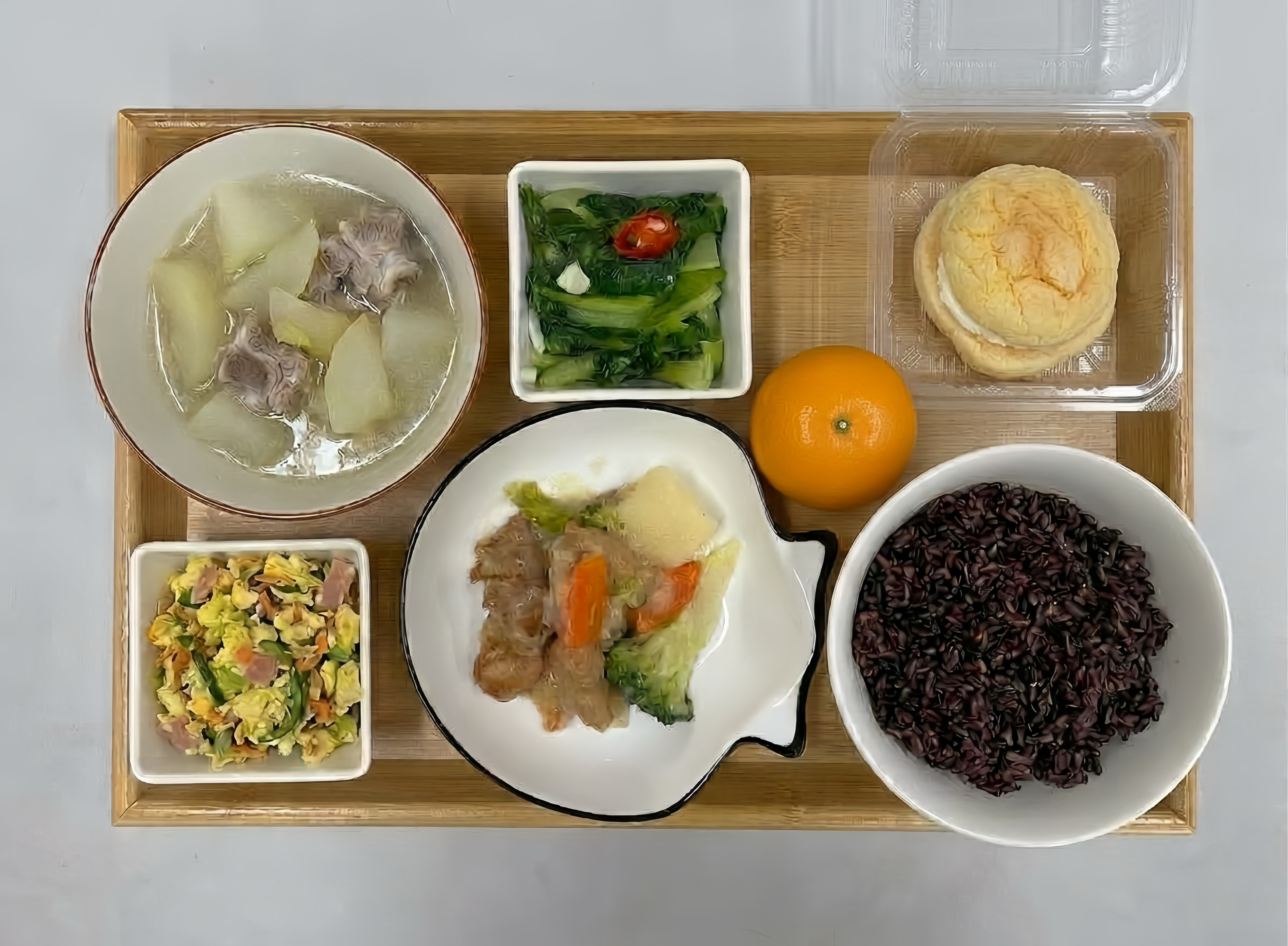
Now look at our real school lunch. In the shell-shaped dish, can you find the fish in a pale sauce with orange carrots and green broccoli? Around it are purple rice, a bowl of soup, green vegetables, an egg dish, an orange and a small bun. The cards show an example of the dish; our photograph records the meal served at school.
The cards also share that many people in France like to take time to eat well: sharing meals with family and friends, and cooking simple dishes with fresh ingredients. What makes a meal feel special at your table?
Food detective · 餐桌小偵探
The cards show four ingredients: fish, carrot, broccoli and mushroom. How many of them can you find in the lunch photo?
Open a clue · 點開提示
Look closely at the shell-shaped dish. The carrots and broccoli are easy to spot. If you cannot find a mushroom, that is a good observation, not a mistake. A card is an illustration, and the kitchen's recipe may be different. Ask the kitchen if you want to check.
Milk can become a smooth white sauce. What other foods do you know that are made from milk? Share your list with a classmate.
The cards illustrate one version of a French-style cream dish. The school's full recipe has not been confirmed here. · 圖卡為料理示意;實際配方待核對。


Thai Basil Pork (Pad Kaphrao)
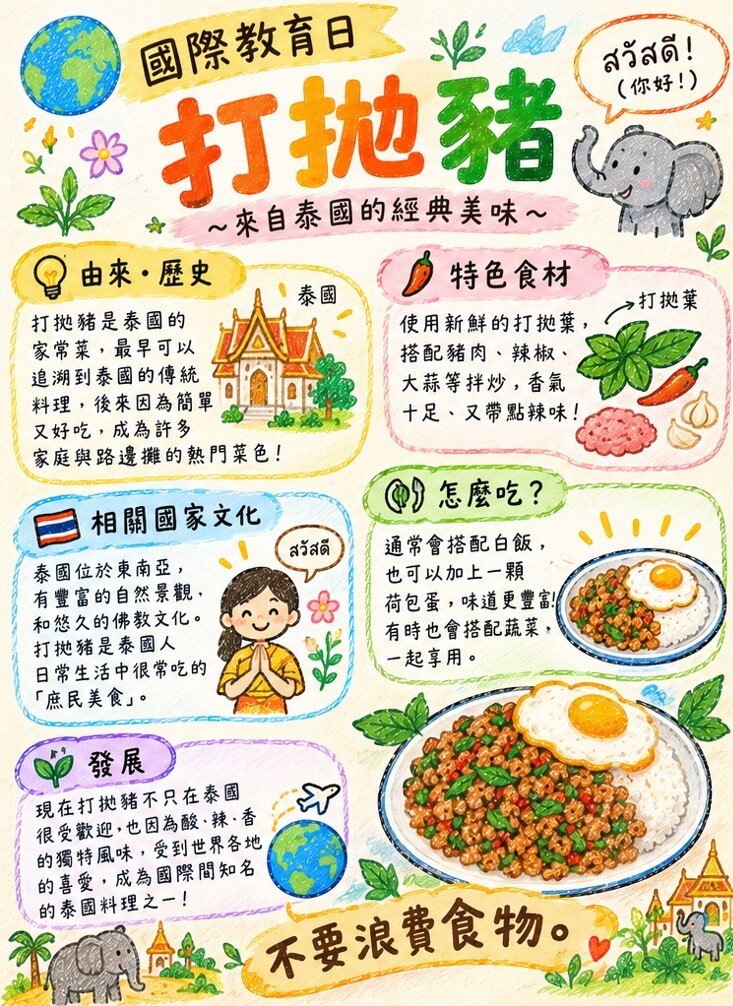
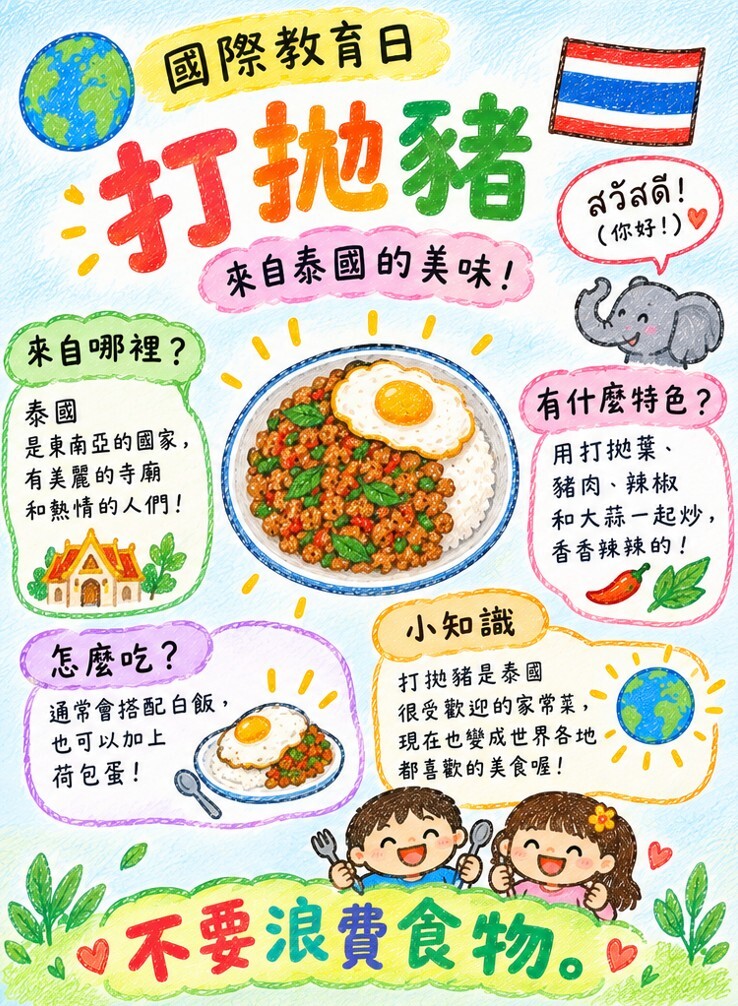
สวัสดี! (Sawasdee! · Hello! · 你好!) Our Week 7 learning cards take us to Thailand, a country in Southeast Asia known for its beautiful temples, natural scenery and long Buddhist tradition. The featured dish is Thai basil pork, called 打拋豬 in Chinese. The cards explain that it is a home-style dish in Thailand: pork is stir-fried with fresh holy basil leaves (打拋葉), chili and garlic, so it smells fragrant and tastes a little spicy.
The cards also tell us how it is eaten. It is usually served with white rice, and people often add a fried egg on top. Because it is simple and tasty, it became popular with families and at street stalls, and today people around the world enjoy its mix of sour, spicy and fragrant flavors.
Now look at our real school lunch. On the white plate, can you find the minced pork with green leaves and pieces of tomato? Around it are purple rice, tofu skin with red pepper and carrot, lettuce with corn, a bowl of sweet mung bean soup with tapioca pearls, a kiwi fruit and a bottle of soy milk. The cards show an example of the dish; our photograph records the meal served at school.
Food detective · 餐桌小偵探
On both cards, what sits on top of the basil pork? Can you find it on our school lunch tray?
Open a clue · 點開提示
Look for the fried egg on the cards. Our tray has no egg on the pork, but it does have something made from soybeans to drink. Then look closely at the pork: the red pieces are tomato, which the cards do not show. A card is an illustration, and the kitchen's recipe may be different.
Thai basil pork is famous for being a little spicy. What do you do when a food is too spicy for you? Share your idea with a classmate.
The cards illustrate one version of Thai basil pork. The school's full recipe has not been confirmed here. · 圖卡為料理示意;實際配方待核對。

Cajun-style Fried Pork Chop
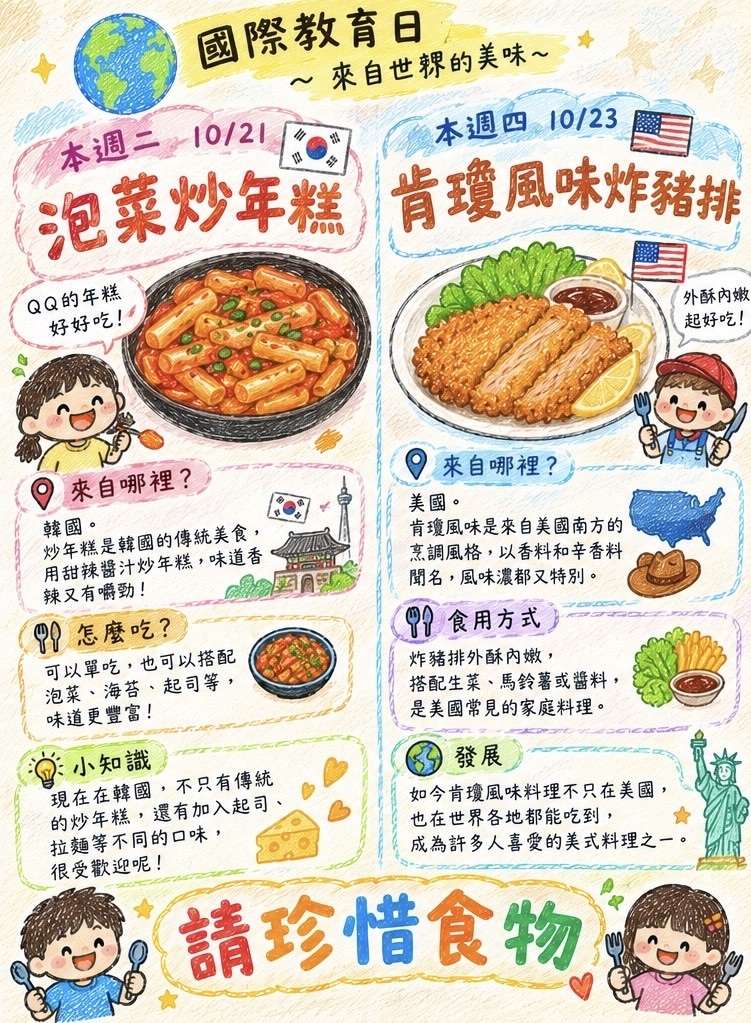
Howdy! (Hello! · 你好!) This week our learning card visits two countries. On Thursday we travel to the United States. The featured dish is a fried pork chop with Cajun-style seasoning. Cajun cooking comes from Louisiana in the southern United States and is known for its bold mix of herbs and spices. The card describes the pork chop as crispy outside and tender inside, often eaten with lettuce, potatoes or a dipping sauce.
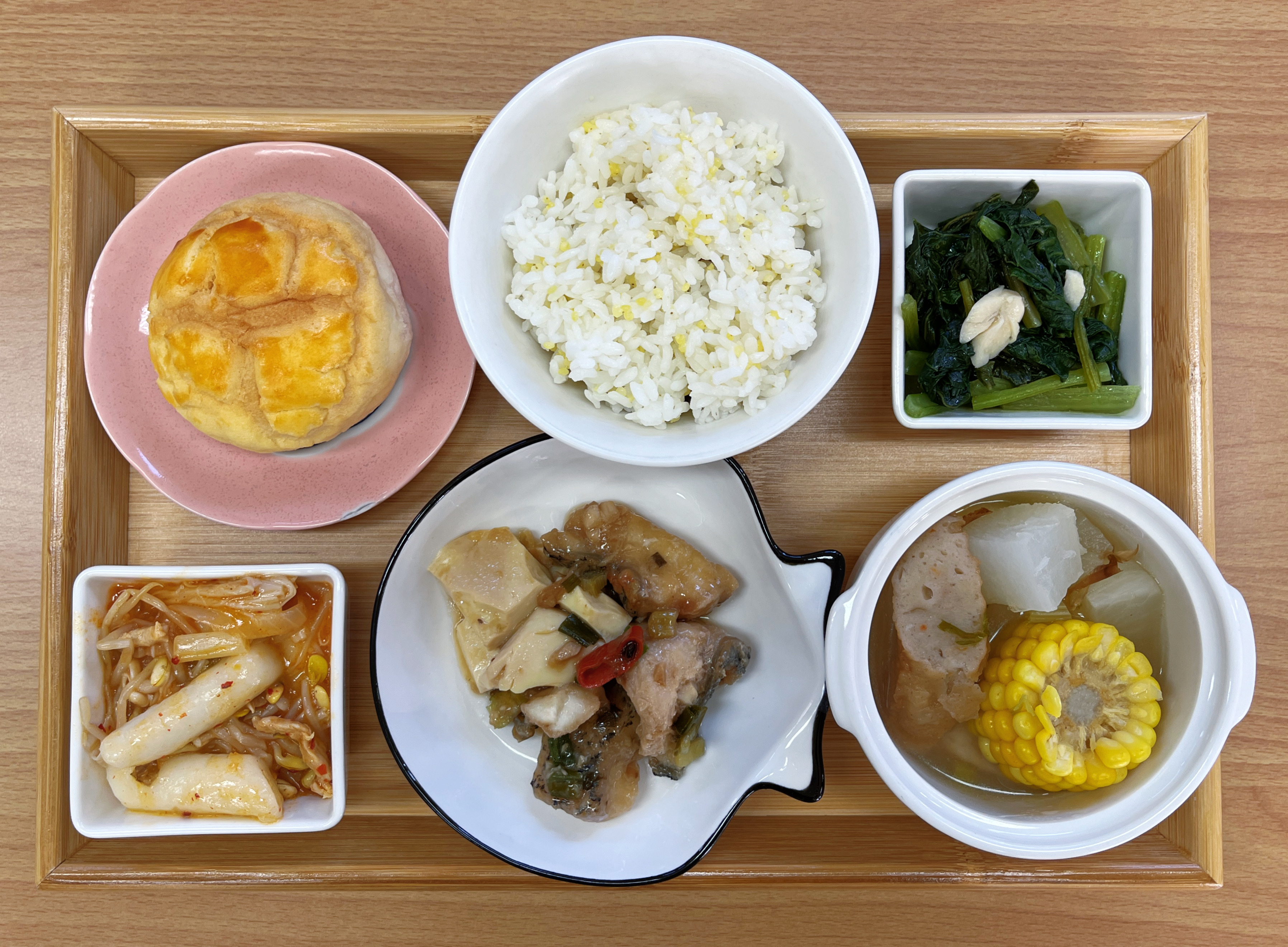
Now look at our real school lunch. Next to the purple rice, can you find the golden-brown pork chop? Around it are pumpkin with cabbage and mushrooms, leafy greens with small dried fish, a bowl of white radish and corn soup, a kiwi fruit, and two slices of brown sugar cake (黑糖糕) on a small pink plate. The card shows an example of the dish; our photograph records the meal served at school.
Earlier in the week, Tuesday lunch took us back to Korea with kimchi stir-fried rice cakes (泡菜炒年糕). The card explains that these chewy rice cakes are cooked in a sweet and spicy sauce, and that many people in Korea now enjoy new versions with cheese or ramen noodles. Do you remember our Korean-style mixed rice from Week 5?
Food detective · 餐桌小偵探
On the card, the pork chop is served with lettuce, lemon and a dipping sauce. What did our school lunch serve beside it instead?
Open a clue · 點開提示
Look at every part of the tray: rice, vegetables, soup and fruit. Then look at the pink plate. Brown sugar cake is a snack many visitors take home from Penghu, so an American-style main dish and a Penghu treat shared the same lunch.
Korean rice cakes are long and chewy. When do families you know eat 年糕 (rice cake)? Is it sweet or savory? Share your answer with a classmate.
The card illustrates the dishes; the school's full recipes have not been confirmed here. The dates printed on the card were planned in advance; this page follows the actual lunch days. · 圖卡為料理示意;實際配方待核對。圖卡日期為事前規劃,本頁依實際供餐日標示。

Your turn: tell the story of a dish
Choose one food you know. What ingredients can you see? Where might they come from? When do people around you eat it? Ask an adult or classmate for their story, then share one new thing you learned.
There is no single “correct” family story. Listen with curiosity and respect.